News
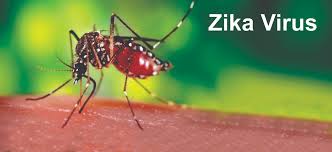
IIT Mandi team finds target protein for action of antimalarial drug against Zika Virus
- by Team ABLE - 29 Jan, 2019
The Indian Institute of Technology Mandi researchers have made significant progress in finding a drug to treat the Zika virus (ZIKV) that has affected more than a million people across the world.A team led by Dr.Rajanish Giri, Assistant Professor of Biotechnology, IIT Mandi, is working on this subject.
Following an earlier finding by Prof. Indira Mysorekar from Washington University at St. Louis, USA, thathydroxychloroquine (HCQ), a drug commonly prescribed for treating malaria, reduces ZIKV transmission from mother to foetus, Prof. Giri’s lab has identified the target viral protein on which HCQ acts. Prof. Giri has collaborated with Prof. Mysorekar and Prof. Sanjeev Kumar Singh from Alagappa University, Tamil Nadu, on this work and their findings have recently been published in ACS Omega, an Open Access journal of the American Chemical Society.
“While Prof. Mysorekar’s group originally selected HCQ for its ability to inhibit autophagy, its mechanism of action against ZIKV target protein was not known”, explains Prof. Giri, adding, “Our work has identified a viral protein on which HCQ acts”. This finding is important as development of drugs against ZIKV hinges on understanding the interactions between the potential drug and the target components of the virus.
Viral proteases are enzyme in viruses and are good targets for drug action. “To block Zika virus activity we targeted an important enzyme called protease. This enzyme governs the polyprotein maturation, leading to survival and pathogenesis of the virus” says Prof. Giri. In the case of the Zika virus, the NS2B-NS3 protease is important for viral multiplication in the host.
In order to find molecules that can inhibit the action of NS2B-NS3 protease, Prof. Giri’s team first performed high throughput virtual screening of an FDA-approved drug library and identified five compounds that showed promising affinity towards Zika virus protease. One of the five compounds was HCQ.
“Repurposing approved drugs can be an efficient method to identify drug compounds, which may be capable of activating or inhibiting new targets”, the researchers mention in their ACS Omega research article. They add that such an approach can reduce development time and cost and improve safety. The top five compounds identified through screening were subjected to molecular dynamics simulation. “Various amino acid residues are involved in stabilizing drug molecules at the active site of the NS2B-NS3 protease of Zika virus,” explained the researchers.
Prof. Giri then chose HCQ from the five drug molecules for further analysis, based on the computational drug discovery work and validation by molecular dynamics simulations.
A team led by Dr.Rajanish Giri, Assistant Professor of Biotechnology, IIT Mandi, has made significant progress in finding a drug to treat the Zika virus (ZIKV)
voice for BT and BEST 2026